The dust of Mars settles on your visor as you step out of your habitat for the first time. Before you lies a vast, rust-colored landscape of craters, canyons, and impossible rock formations. Your mission for Mars First Logistics is simple in concept but wonderfully complex in execution: design, build, and pilot a fleet of custom rovers to transport cargo across this unforgiving terrain . Your success hinges not on firepower, but on engineering ingenuity and creative problem-solving.
This game is a sandbox of physics and logistics. The most important tool at your disposal is the vehicle editor, a powerful workshop where your ideas take shape. Your initial rover, the “Crate Hauler,” is a simple but vital starting blueprint. Treat it as a lesson: it teaches you the basic relationship between a chassis, wheels, a power cell, and a grabbing arm. Don’t see the pre-built blueprints as final solutions, but as learning templates and helpful fallbacks for when your own magnificent creation is stuck at the bottom of a canyon . The real joy of MFL comes from solving these engineering puzzles yourself.
- Embrace the Design Mindset: Your goal is not just to complete contracts, but to enjoy the process of designing a solution. If you simply use a blueprint to instantly solve a problem, you are robbing yourself of the game’s core pleasure . Let the blueprints inspire you, not limit you. See a design flaw in a pre-built rover? That’s your cue to improve upon it!
- Start Simple, Then Specialize: Your first vehicle should be a stable, all-purpose rover capable of handling the initial, simple cargo like crates. As you progress, you’ll encounter cargo that is long, unbalanced, fragile, or awkwardly shaped. This is when you’ll need to design specialized rovers. Don’t try to build a single rover that can do everything right away.
- Learn from Failure: In Mars First Logistics, failure is a better teacher than success. A rover that tips over, gets stuck, or drops its cargo is giving you invaluable feedback. Instead of getting frustrated, analyze why it failed. Was the center of gravity too high? Was it not powerful enough? Use this knowledge to go back to the editor and refine your design.
Machine Shop in Mars First Logistics
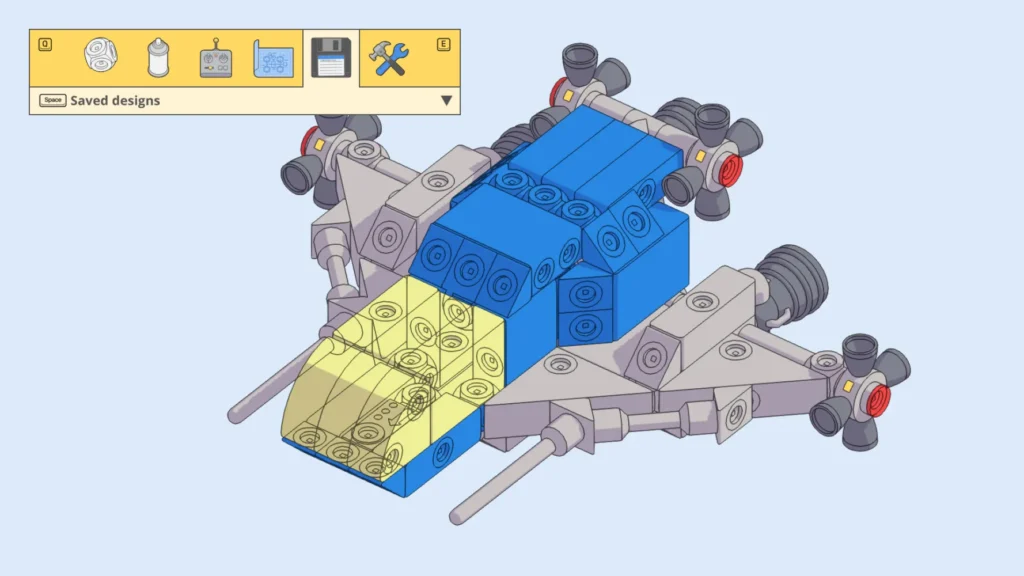
The vehicle editor is your home, your laboratory, and your best friend. Mastering its intricacies is the key to becoming a master logistician. The parts you unlock are the vocabulary with which you will write your engineering solutions on the Martian landscape.
- Understand Your Power Network: Every active part on your rover requires power and a control signal. The Power Cell is the heart of your system. From it, you must run Pipes to distribute power. Think of it like a circulatory system. If a motor or actuator isn’t working, the first thing to check is your piping. Is it connected to the power cell? Is the pipe broken from a rough impact?
- Grasp the Grabbers: Your primary tool for interaction is the grabbing arm. Not all grabbers are created equal. Some are stronger, some are faster, and some have longer reach. For your first rovers, prioritize strength and reliability over speed. A slow, steady grab is better than a fast one that drops the cargo mid-climb.
- Balance is Everything: Mars has gravity, and it is not forgiving. The game’s physics engine is relentless. A top-heavy rover will roll over. A rover that is too long might get stuck on a hill. A rover that is too short might not be able to see where it’s going. Always consider your vehicle’s center of mass. Use the center of mass indicator in the editor—it is your most important design tool. Wider wheelbases and lower profiles are almost always more stable.
To help you get started, here is a breakdown of some of Mars First Logistics core part types and their strategic uses:
| Part Category | Key Examples | Primary Function | Beginner Strategy & Tips |
|---|---|---|---|
| Movement | Wheels, Balloons, Tracks, Legs | Provides locomotion across terrain. | Start with sturdy, all-terrain wheels. Unlock and experiment with balloons for overcoming deep canyons and rough topography. |
| Power | Power Cells, Pipes, Solar Panels | Provides and distributes energy to all parts. | Always check your pipe connections if a part fails. Use multiple power cells for larger, more power-hungry rovers. |
| Interaction | Grabbers, Magnets, Winches | Allows you to pick up, hold, and manipulate cargo. | The standard grabber is versatile. Magnets are great for metallic cargo. Winches can be used for lifting and creating complex cranes. |
| Structure | Chassis, Beams, Panels | Forms the core frame and body of your rover. | A wider, lower chassis is more stable. Use beams and panels to create custom frames that perfectly fit specific cargo. |
| Propulsion | Thrusters, Spinners | Provides powerful, directional force. | Ideal for creating flying machines or adding extra pushing power to climb steep hills. Use sparingly as they consume a lot of power. |
Conquering Landscape
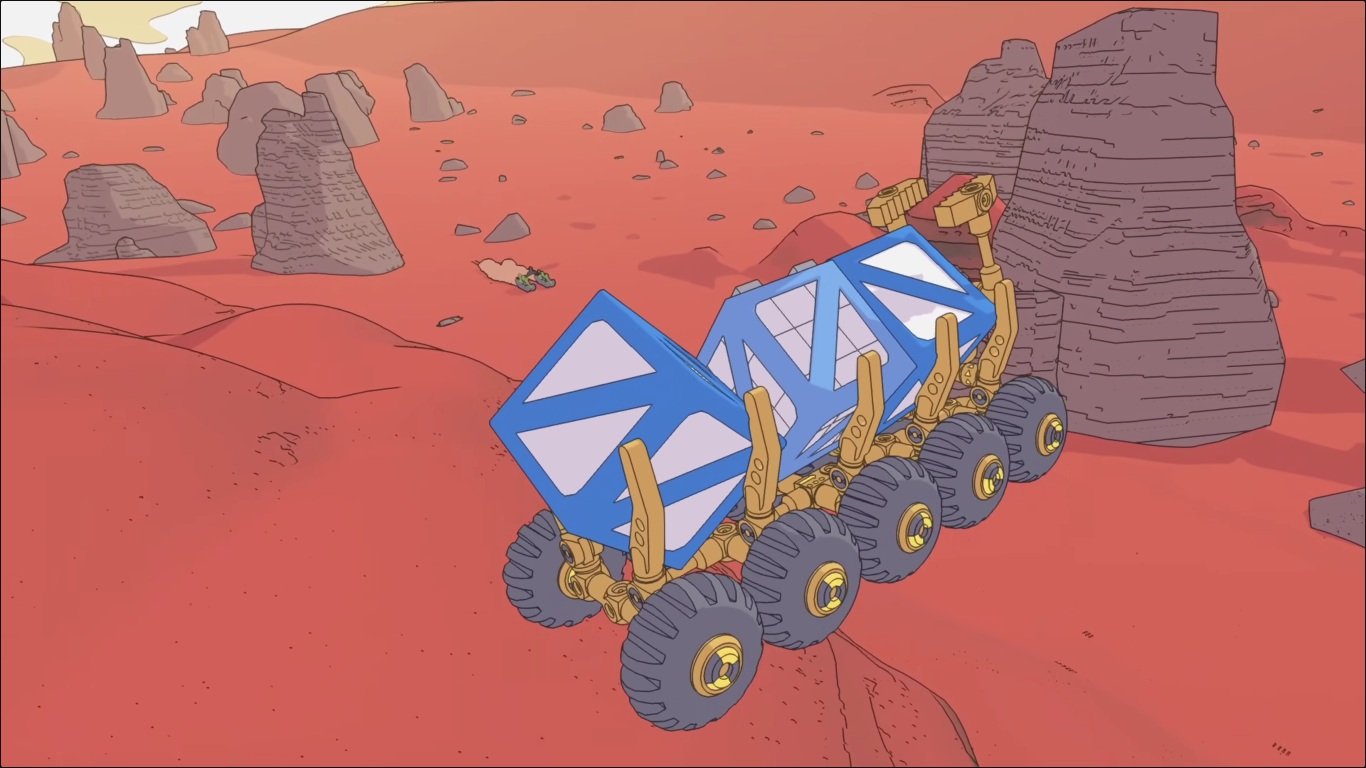
Mars is not a flat, empty parking lot. It is a world of dramatic elevation changes, treacherous slopes, and hidden obstacles. Your routing and piloting skills are just as important as your engineering skills.
- Scout Your Route: Before you load up your precious cargo and set off on a long journey, make a dry run. Pilot your empty rover from the pickup point to the delivery point. Look for the path of least resistance. Is there a steep cliff you can avoid by going around? Is there a narrow passage your wide load won’t fit through? A few minutes of scouting can save you from a frustrating, cargo-laden recovery mission.
- Master the Art of Piloting: Driving your creation is a skill. Learn to throttle your motors gently. Sudden, full-power starts and stops can cause your rover to flip or your cargo to swing loose. When climbing a hill, use a steady, consistent throttle. If you’re sliding, turning slightly sideways can sometimes provide more traction.
- The Magic of Winches and Cranes: As cargo becomes more complex, simple grabbers won’t always suffice. Learning to build and use crane systems with winches is a game-changer. A winch can be used to lift a cargo straight up, to stabilize a long object from a second point, or to pull your rover out of a ditch. They add a layer of tactical control that can make the impossible, possible.
Performance, Progression, and Co-op
- Optimizing Your Experience: Mars First Logistics is not a graphically intensive game, but it runs beautifully on a wide range of hardware. If you’re on a portable device like the ROG Ally, you can enjoy a smooth 60 FPS experience at a low 10W TDP, conserving battery for long sessions. Crank the TDP to 15W for a buttery-smooth 120 FPS if your hardware supports it.
- The Progression Loop: Your progress in Mars First Logistics is measured in completed contracts and the new parts they unlock. Each new part is a new tool in your toolbox. When you unlock a new thruster or a new type of leg, don’t just stick it in a parts bin. Build a new rover specifically designed to utilize that part’s unique strengths. This is the best way to learn and expand your capabilities.
- Co-op: A Double-Edged Sword: Mars First Logistics co-op mode is fantastic for collaborating with a friend, but it requires a shared understanding. The community has noted that having one player use pre-made blueprints while the other builds from scratch can create friction and “defeat the purpose of the game” . Communicate with your partner before you start. Decide on a playstyle: will you collaborate on a single design, or will you each build your own rovers and tackle challenges separately? Setting these expectations will ensure your co-op experience is fun and rewarding for everyone.
Your journey in Mars First Logistics is just beginning. You will face challenges that will test your patience and ingenuity, but the satisfaction of seeing a rover you built with your own two hands successfully navigate a treacherous canyon and deliver its payload is unmatched.