Entering the old GPU market for a super budget PC build requires a shift in mindset away from modern marketing hype and toward raw hardware metrics, electrical efficiency, and software lifespan. When your budget is highly restrictive, your primary goal is to maximize performance per dollar without accidentally purchasing a component that is functionally obsolete or on the verge of physical failure.
By establishing strict baseline criteria—such as a mandatory 4GB VRAM buffer, native DirectX 12 or Vulkan API compatibility, and low power envelopes under 150W to 200W—you can easily filter out traps like abandoned architectures or power hungry vintage flagships. This strategic approach ensures you land an affordable, resilient graphics card capable of transforming a low cost PC into a highly competent, responsive entry-level gaming station.
This guide will break down the rules for selecting an old GPU for your super budget gaming build and the best GPU to pick.
Rules for Selecting Old GPU
When targeting an older graphics card with the unique combination of low power consumption and at least 4GB of VRAM for modern gaming, you have to follow strict rules.
Prioritize 4GB VRAM Models
Prioritizing a minimum of 4GB of VRAM for a super budget build is the definitive boundary line between a computer that runs smoothly and one that completely breaks when launching games. When a graphics card runs out of its dedicated memory, it hits a performance cliff.
Modern game design has also changed, meaning many newer titles will outright refuse to run on anything less than 4GB. Modern game pipelines scan your hardware configuration upon startup. If the game detects a 2GB card, it will often trigger a hard crash-to-desktop error because the card cannot physically hold the basic level geometry. A 4GB buffer acts as a mandatory passport that allows modern game engines to actually open.
API Compatibility (DirectX 12 / Vulkan)
When picking old graphics card for a super budget gaming build, understanding API compatibility is just as vital as checking the VRAM. An Application Programming Interface (API)—such as DirectX 12 or Vulkan—acts as the foundational translation layer that allows the game software to communicate directly with the graphics card hardware. Even if an older GPU has massive raw processing power and plenty of memory, it will remain entirely useless if it lacks the hardware level architecture required to understand the code of modern game pipelines.
low Power Consumption
Keeping power consumption well under 200W is a critical rule for super budget gaming builds because it directly impacts the hidden costs of your entire computer setup. When you purchase a graphics card that draws a modest amount of electricity, usually between 50W and 150W, you are not just saving money on your monthly electric bill. You are preventing a domino effect that forces you to buy expensive supporting hardware. A low wattage card keeps your budget intact by ensuring that your power supply unit, computer case, and cooling system can remain as cheap and simple as possible.
Lower Game Texture Settings to “Medium” or “Low”
4GB of VRAM is the absolute minimum line for modern gaming. If you try to push textures to High or Ultra, the game will overflow the 4GB buffer, spill data into your slow system RAM, and drop your frame rates into unplayable stuttering. Keeping textures at Medium allows low wattage hardware to sustain smooth 60+ FPS performance.
The Best Old GPU For Super Budget PC Gaming
NVIDIA GeForce GTX 970 4GB
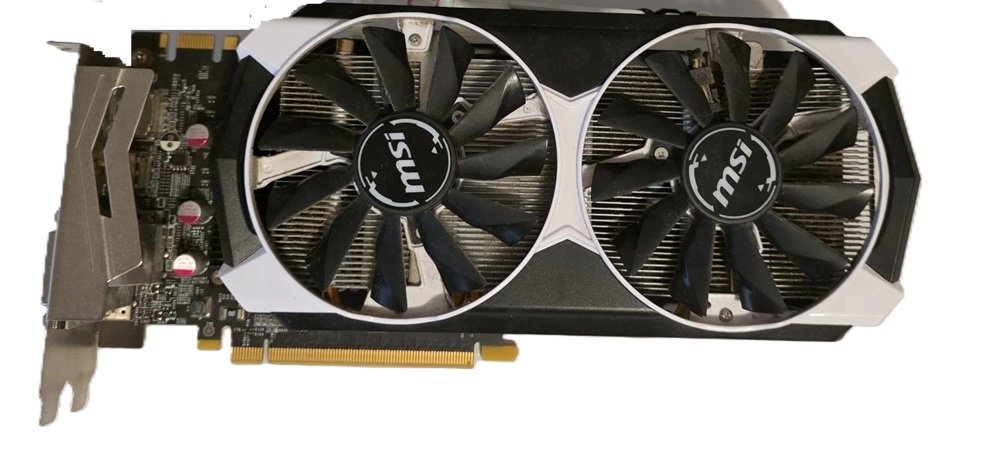
The NVIDIA GeForce GTX 970 4GB is widely considered a legendary hall of fame graphics card, and it remains one of the absolute best used choices for an ultra low cost gaming PC. Originally launched in late 2014, this card was the absolute gold standard for mainstream gaming, selling millions of units because it punched massively above its weight class. Today, its incredible abundance on the secondary used market has caused its price to plummet down to a stable $35 to $60 range on auction platforms, allowing cash strapped builders to acquire competent graphics processing for the cost of a few lunches.
The card balances power consumption and physical thermal efficiency beautifully for cheap setups. Drawing roughly 148 watts of electricity at full load, it operates cleanly on standard, inexpensive 450W to 500W power supplies, requiring two 6-pin PCIe cables. Popular custom variants from manufacturers like EVGA or MSI were explicitly engineered with noise reduction heat sinks and advanced cooling fans that shut off entirely when idling, keeping the computer whisper-quiet and running safely under 70°C even inside tight, low-cost PC cases with weak airflow
NVIDIA GeForce GTX 1070 8GB
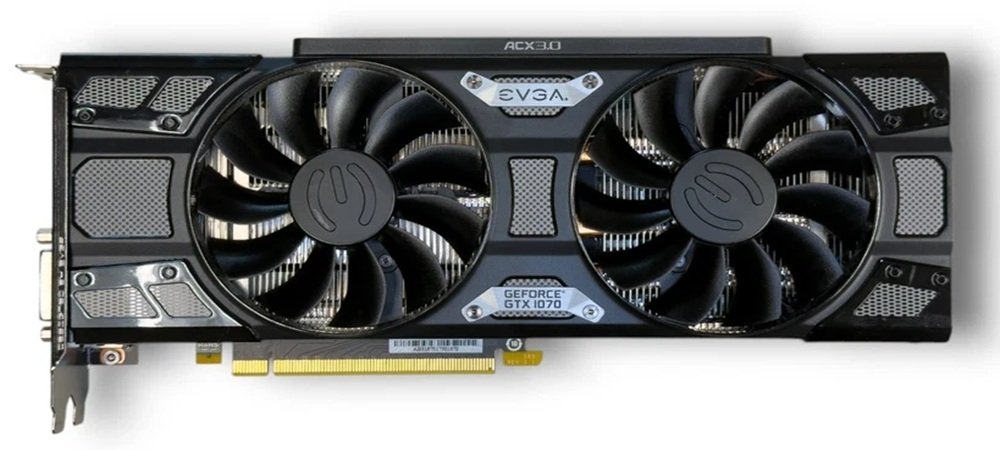
The NVIDIA GeForce GTX 1070 8GB is widely celebrated as one of the ultimate kings of the used marketplace for super budget PC gaming. Originally released in 2016 under NVIDIA’s legendary Pascal architecture, this card single handedly defined high end performance for years. On the secondary market, its massive popularity means it is incredibly easy to find. With used prices stabilizing in an affordable range on platforms like eBay, it delivers an unmatched price to performance ratio for builders trying to piece together a capable machine for under a few hundred dollars.
Rated at a highly modest 150W total graphics power draw, it requires only a single standard 8-pin PCIe power cable from your power supply unit. This efficiency means you do not have to buy an expensive, premium tier power supply; a standard, affordable 450W to 500W unit will easily power your entire system safely. Custom partner models from top brands feature highly efficient, dual fan cooling setups that operate quietly under load, keeping the GPU chip cool even when placed inside cheap computer cases that have limited airflow ventilation
AMD Radeon RX 580 4GB
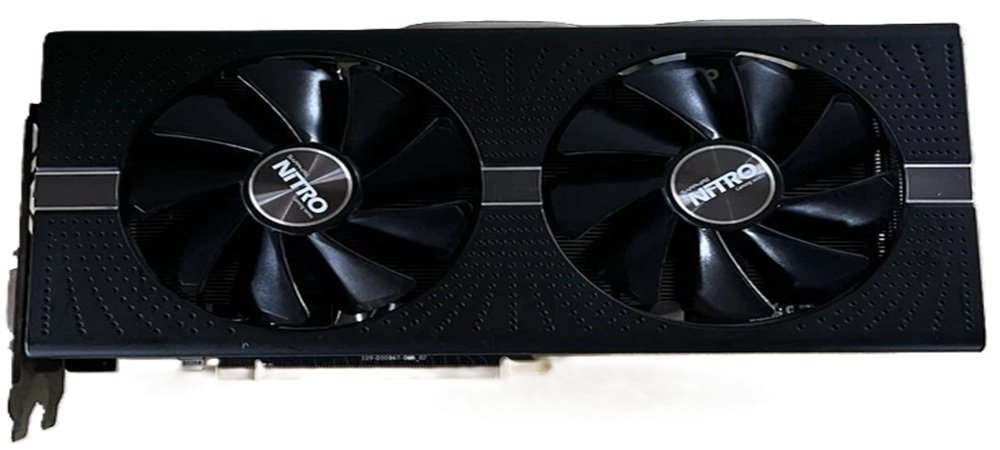
The AMD Radeon RX 580 4GB is recognized as one of the ultimate budget survival graphics cards in the history of PC gaming. Released in 2017 under AMD‘s iconic Polaris architecture, this card was a massive success that flooded the market. On auction blocks like eBay and local regional classified spaces, the 4GB variant often commands a ultra low price tag of roughly $35 to $50, providing an incredibly accessible entry point into desktop gaming.
While the RX 580 4GB remains highly efficient for the money, you must account for its 185W power consumption and its limited legacy status. The card draws a noticeable amount of power and requires at least a solid 500W power supply paired with an 8-pin PCIe power cable. Additionally, AMD officially placed the Polaris architecture into an extended maintenance legacy branch, meaning it primarily receives security updates rather than modern performance optimization packages for brand new game engines. Keeping texture layouts at Medium or Low settings is mandatory to avoid hitting a wall on the 4GB boundary line
AMD Radeon RX 470 4GB
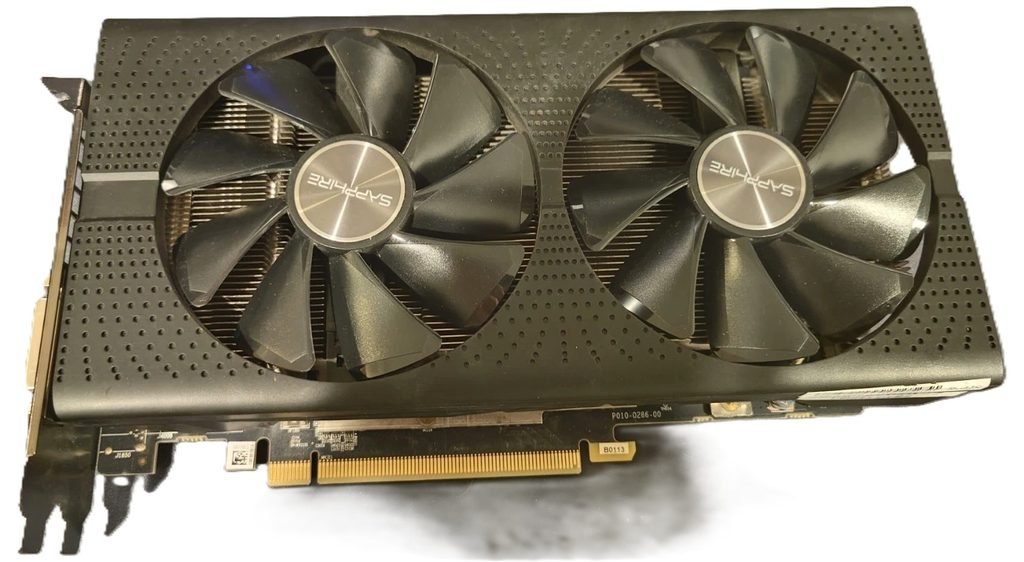
The AMD Radeon RX 470 4GB is widely considered the absolute entry level savior for super budget PC gaming builds. Originally launched in 2016 alongside its slightly larger sibling, the RX 480, this card was built on AMD’s highly successful Polaris architecture. On the secondary used market, it routinely sells for a rock bottom price of roughly $25 to $40, making it a much cheaper option than the RX 580 while still offering almost identical core gaming performance
The card strikes a fantastic balance regarding power requirements for cheap computer builds. Drawing roughly 120W of maximum power under heavy gaming workloads, it is significantly more energy efficient than older high end flagships from the early 2010s that pulled well over 250W. This means you do not have to purchase an expensive premium power supply; a very basic, cheap 400W to 450W power supply utilizing a single standard 6-pin PCIe power cable is more than enough to safely run the entire system.
Final Thoughts
building a super budget gaming machine with an older GPU proves that enjoyable 1080p gaming does not require spending hundreds of dollars on brand new components. Legendary used choices like the GTX 1070 8GB, GTX 970 4GB, or AMD‘s Polaris based RX 580 and RX 470 models highlight how older hardware can successfully survive in the modern landscape through open source upscaling software like AMD FSR.